


FOR THE ARCHIVE CLICK HERE
ALPINE GARDEN CLUB PLANT OF THE MONTH
IBERIS TAURICA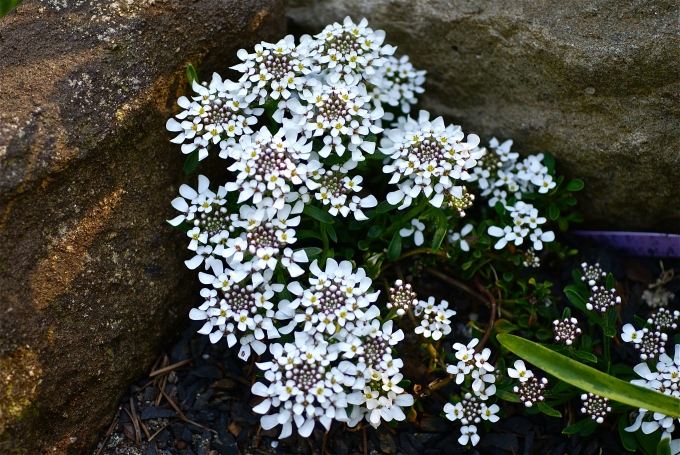
A strong flowering species in a cool Spring, the seed of the plant was obtained from Mojmir Pavelka in 2010. He collected it in the Bolkar Dag, Turkey in 2010. There was some noticeable diferences morphologically between the seedlings. I kept the tight, rosette-forming individuals. Generally, it has a very compact habit and a doming form 2"-3" high and 6"-8" wide. Its loaded with pinkish buds before opening to dazzling, clear white flowers. Pavelka states in his 2010 descriptive list that it is a "short-lived perennial". The RHS Dictionary of Gardening believes it to be either "annual or biennial". We are awaiting the verdict this coming year. It was in flower and looking very smart for over two months. Needless to say, I was delighted at how long it stayed in flower.
The genus name is derived from Iberia, the Spanish/Portugese peninsula, was first discovered and identified. This is also where the common name of Candytuft was applied to this member of the Crucifer family. Many gardeners of the alpine persuasion steer clear of this genus due to the weedy tendencies of I. sempervirens and its many named cultivars ('Little Gem', Purity', 'Snowflake', etc.) However, a plant as good as I. taurica is well worth seeking. So too is its perennial brethren, I. pruitii. The genus is undergoing revision by molecular taxonomists at present to sort out the group.Here on the west coast, we have many of the natural vectors and rhythms that the DNA of this species requires and desires. With these meterological and photoperiod allies, we should be able to really grow them well. So far, so good.
Grahame WareNovember 2012Owl and Stump Rare Plants